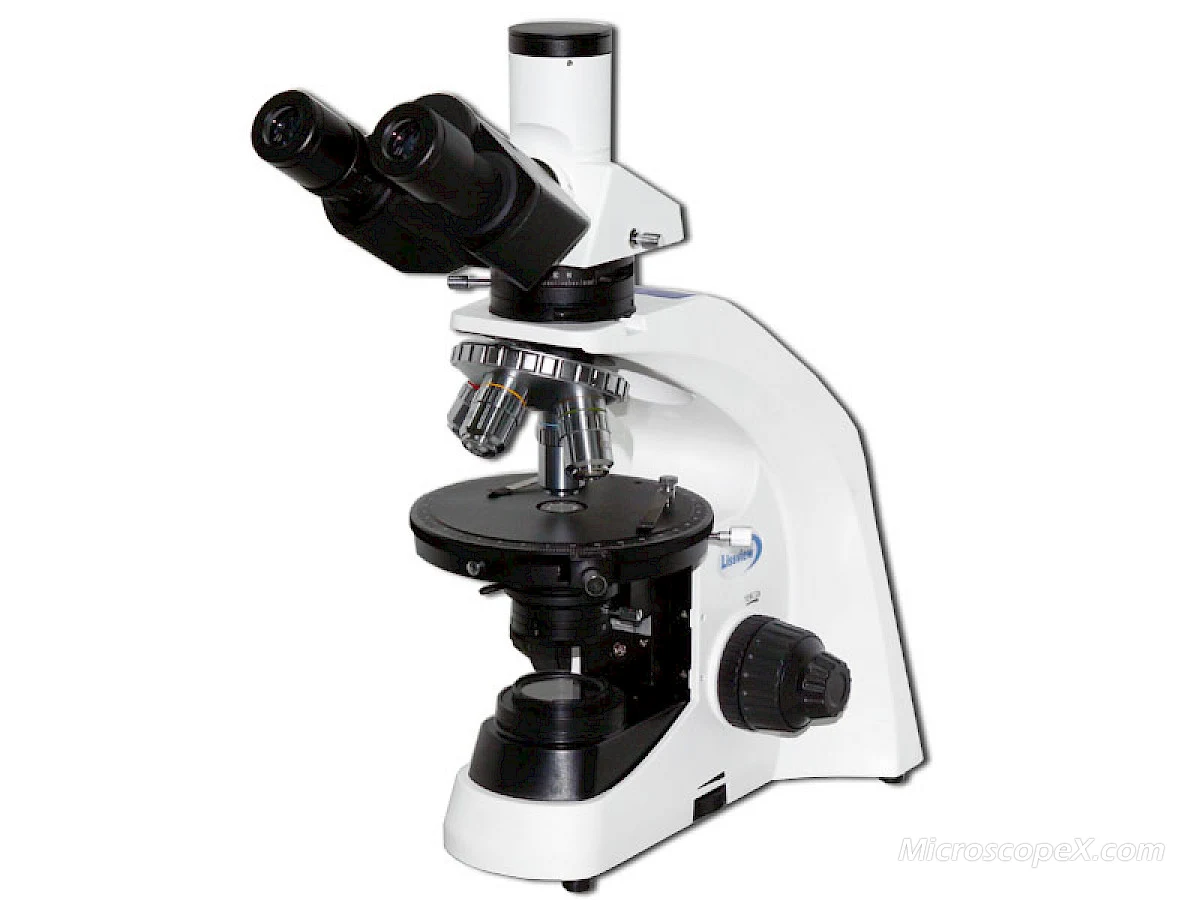
POL2600 Transmitted Polarization microscope is utilized polarize light to observe and research the matter which have double refraction features, the user can make single polarizing observation, orthoscopic observation, conescopic observation. It is applied in geology, chemicals, physic and leechdom fields. It is also widely used to observe the crystal of liquid macromolecule polymer, biomedical polymer and liquid crystal. It is the ideal instruments for scientific research and universities teaching demo.
Trinocular, single diopter adjustment, inclined 30°, can send 100% of the image light to top photography port and also can be connected to the camera.
10X wide field plan eyepiece, field Φ20 mm, can provide expanse and smooth observation space.
The intermediate attachment includes the impellent style of analyer (90° rotatable with scale and fine nonius) which can be taken off from the light path and the impellent style of bertrand lens (center adjustable). It can be added λ compensator, λ/4 compensator or quarts wedge compensator.
Objective, strain-free plan achromatic objective (with or without cover glass), center adjustable, can ensure the centre of objective and the rotatable stage completeness superposition.
Rotund rotatable stage, Φ150mm diameter, 360° graduated (in 1° increments), miniunm, retardation resolution 6’, center adjustable and with tightener.
Polarizer, 360° rotatable, having 0, 90 180, 270 four scale, is set under the aperture disphragm.
The illumination system with 1W LED lamp (brightness adjustable) can provide clear and bright image.
Human Design, portable hand shank at the back of the main body provide save and convenient operation.
LissCam Series Digital Video USB2.0 and CMOS Sensor Camera, 1.3MP, 3MP, 5MP, 10MP.

POL2600
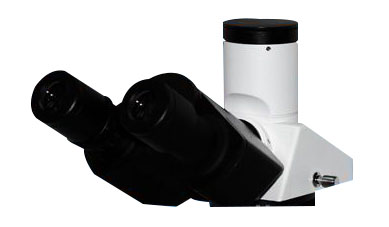

Head & Intermediate Attachment of POL2600


Stage & Nosepiece of POL2600

Transmitted Illumination System of POL2600

Hand Shank of POL2600
Diagram of POL2600

Dimension of POL2600

Digital Camera Photo

Perpendicular Polarized Light 1/4 Wavelength


Perpendicular Polarized Light & Conoscopic Observation